6 Reasons You Should Partner with an OTA Consortium Manager
July 9, 2026

Government program offices are under pressure to deliver faster, on tighter budgets, and with more scrutiny from oversight bodies that want to know exactly where money went and what was purchased. At the same time, the technology landscape is moving faster than traditional procurement was ever designed to handle.
Other Transaction Authority (OTA) was created to close that gap. At the center of how OTA works in practice is the OTA consortium manager, a specialized entity that sits between the government and industry, enabling the whole system to function. Understanding what a consortium manager does and why partnering with one matters can change how your program acquires technology.
Here’s why program offices choose to work with an OTA consortium manager:
1. Access to Non-Traditional Partners
The most innovative technology being developed in the United States today often does not come from traditional defense contractors. It’s instead being built by startups, dual-use technology firms, and other businesses that have never navigated a FAR-based procurement process.
An OTA consortium manager, like NSTXL, maintains a curated network of these non-traditional performers. When your program needs a breakthrough capability in areas such as dual-use technology, artificial intelligence, advanced manufacturing, or space domain awareness, an OTA consortium puts those companies directly within reach.
Without a consortium structure, most of these innovators may never find their way into your program. Participating in an OTA consortium network makes them vetted, credentialed, and ready to make the right proposal.
2. Collaboration and Teaming Opportunities
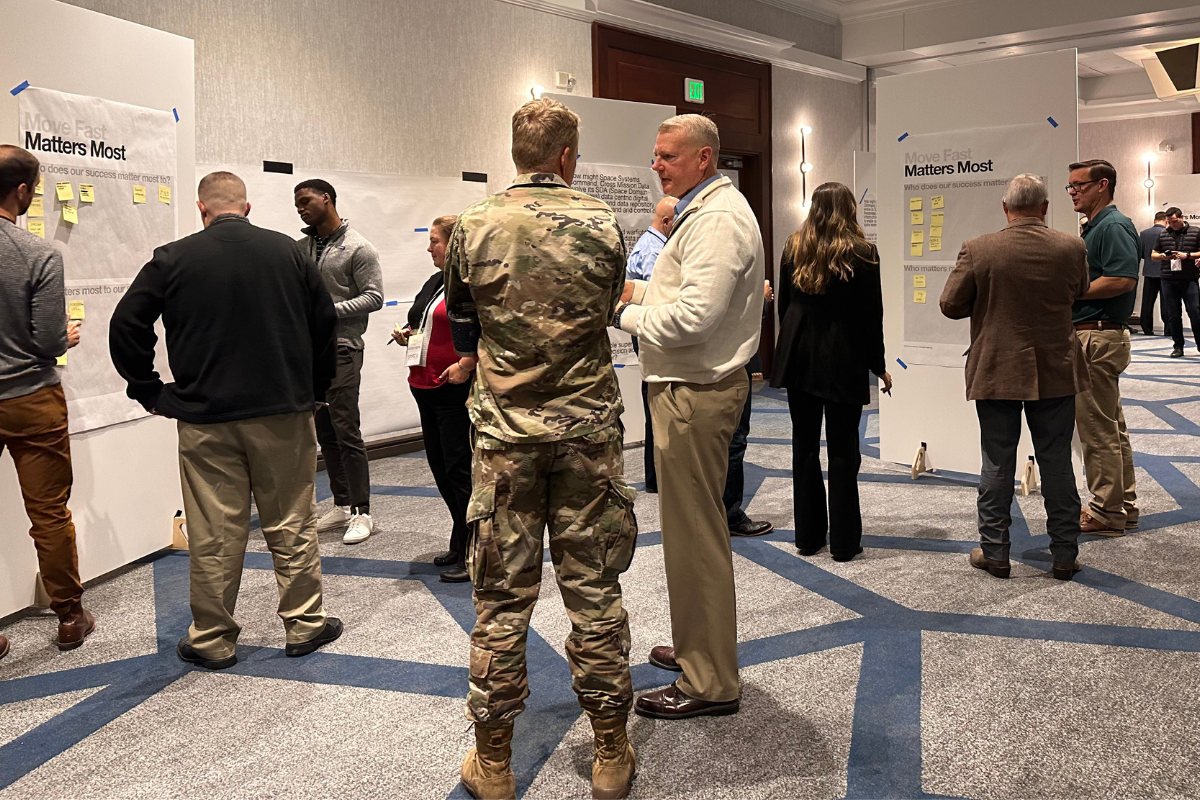
Complex defense programs require teams, but building the right team is one of the most time-consuming parts of any acquisition. An OTA consortium manager simplifies this. Since the consortium’s membership represents a broad spectrum of technical capabilities under one roof, collaboration happens organically. Program offices can tap into a pre-vetted network of innovators who are already connected, communicating, and accustomed to working together on prototype projects.
NSTXL’s Community platform makes this even more direct: members can search for complementary capabilities, identify potential teaming partners, and connect before a solicitation even drops. For a program that requires fast delivery, having a team already in place means stronger proposals, more complete technical solutions, and less time lost to standing up a contractor team at the last minute.
3. Reduced Administrative Burden
Every hour your program office staff spends managing invoices, tracking compliance paperwork, coordinating communications across multiple vendors, or chasing documentation is an hour not spent on mission outcomes. An OTA consortium manager absorbs much of this burden, leaving your office free to focus on the most important parts of the mission.
For government performers, NSTXL’s program management infrastructure includes real-time tracking of fund allocation and disbursement, milestone-gated payment releases, and integrated reporting, so your team has visibility into program performance without having to build that infrastructure themselves.
NSTXL members have access to proposal guides, templates, and direct staff support to clarify solicitation requirements and sharpen proposal narratives, which reduces the learning curve for organizations new to government contracting.
Explore NSTXL’s deep dive on membership to see what this looks like in practice.
4. Faster Acquisition Speed
NSTXL can move an opportunity from solicitation to award in under 120 days. Traditional FAR-based contracts can take several years to get from requirements definition to award — and in technology domains where capabilities evolve on monthly timescales, that gap has real consequences for program outcomes.
OTA prototyping has already set a new standard for acquisition timelines across the defense acquisition ecosystem. An established OTA consortium manager has already developed the legal agreements, contracting infrastructure, and relationships with Agreements Officers. Your program will inherit that foundation so that it doesn’t have to start from scratch.

5. Increased Visibility of Opportunities
Under the OTA consortium model, rather than issuing a solicitation through the open market and hoping the right companies find it, you’re publishing directly to a targeted network of pre-qualified members who are actively looking for this kind of work.
NSTXL’s membership includes over 600 corporate, nonprofit, educational, and financial institution members, many of whom are non-traditional contractors. That means when your solicitation goes out, it reaches an audience that is focused on defense technology . This leads to better proposals and a shorter path to the right solution.
Explore how NSTXL’s network has driven real outcomes.
6. More Flexible Agreements
Traditional government contracts are built around a framework that prioritizes compliance, standardization, and risk management. These are legitimate goals, but they come at a cost. The rigidity of FAR-based contracts can make it difficult to adapt as technology evolves, scope shifts, or new information emerges mid-program.
OTAs operate outside this framework. Since they’re not subject to the full weight of the FAR, the agreement structure adapts to the program’s actual needs. Scope adjusts, technical approaches evolve, and the contract keeps pace with modern technology.
Partner With NSTXL for Your Next Project
The OTA consortium model works, and the right consortium manager can only enhance your efforts. Government program officers don’t have the ability to learn on the spot. NSTXL has spent 14 years and $9 billion building the kind of infrastructure that means you don’t have to.
Learn more about partnering with NSTXL for your next prototype acquisition.