2026 Space Defense Innovation Kicks Off at SpEC GMM
January 30, 2026
This month, the Space Enterprise Consortium (SpEC) OTA kicked off its annual General Member Meeting (GMM). SpEC Members and government leaders determined how best to build, test, and deliver space defense innovation over the course of the year.
Attendees gathered in Los Angeles, CA to present the progress they have achieved on their projects over the last year, align on critical needs, and discuss the future of space defense innovation in 2026.

Key Takeaways
- Nearly 500 Attendees joined the event in person this year.
- 96 Pitch Day Sessions aligned government and industry leaders on mission-critical technologies and capabilities.
- 13 Breakout Sessions covered CMMC Compliance changes, innovation pathways, and specific technology areas.
- 3 Featured SpEC success stories were presented by members during the Showcase of SpEC.
- Critical alignment on innovation pathways for space defense technology utilizing the SpEC OTA as an acquisition vehicle.
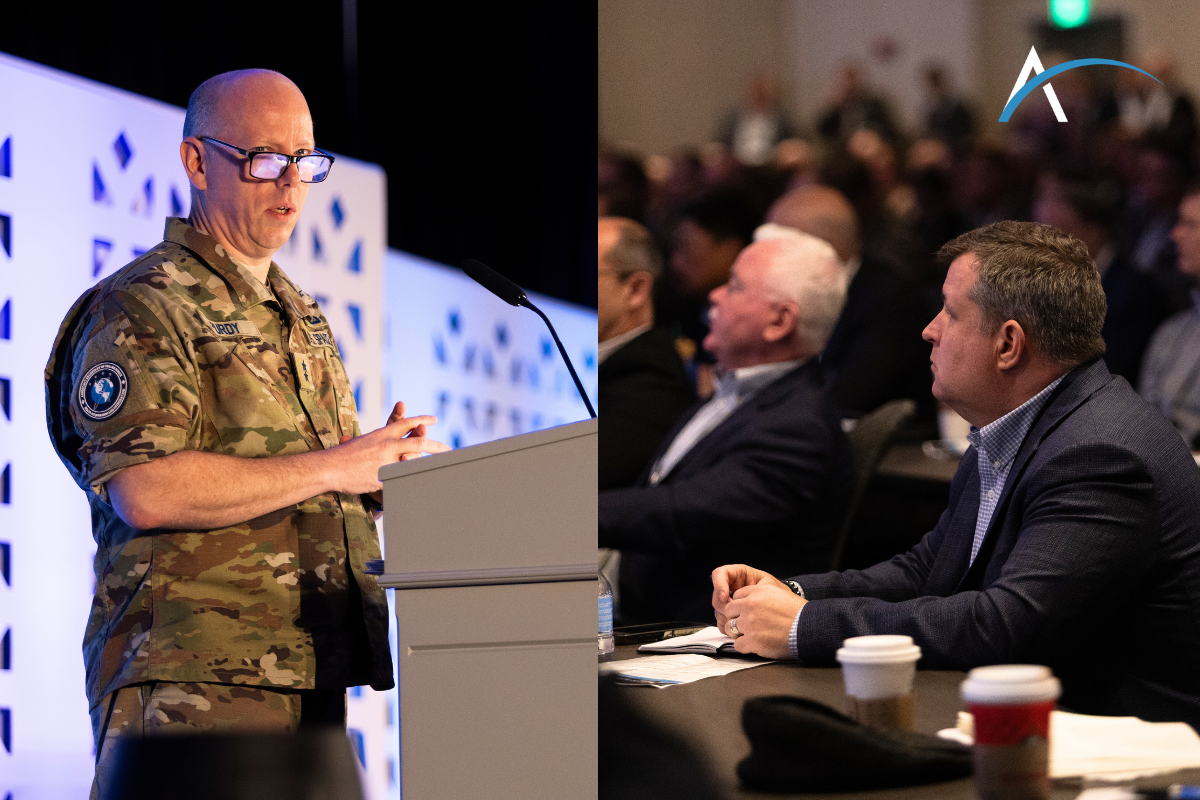
- Impactful keynote speech from Major General Stephen G. Purdy Jr.
Build. Test. Deliver: 2026 GMM Key Sessions
Pitch Days: Bringing Together Government and Industry Leaders
Day one of the SpEC GMM featured 96 Pitch Day sessions with Space Systems Command (SSC), dedicated forums where industry innovators present their technical capabilities, solutions, and ideas directly to government stakeholders. These forums were highly interactive and mission-focused, allowing companies to align directly with government needs and priorities.
Pitch Days also gave government teams the opportunity to discover cutting-edge solutions and accelerate decision-making, while giving industry leaders the rare chance to receive real-time feedback, build meaningful relationships, and potentially secure pathways to future opportunities. Pitch Day technical areas included:
- Ground-Based Radar Digitization with SYD 85 / BAL Space Systems Command – LEO/MEO Sensing Program Office
- OTTI with Operational Test & Training Infrastructure (OTTI)
- SDA Rapid Prototyping & Innovation with Mission Delta 2 (MD2) & 2nd Sustainment Squadron (2STS)
Showcase of SpEC: Innovation in Action
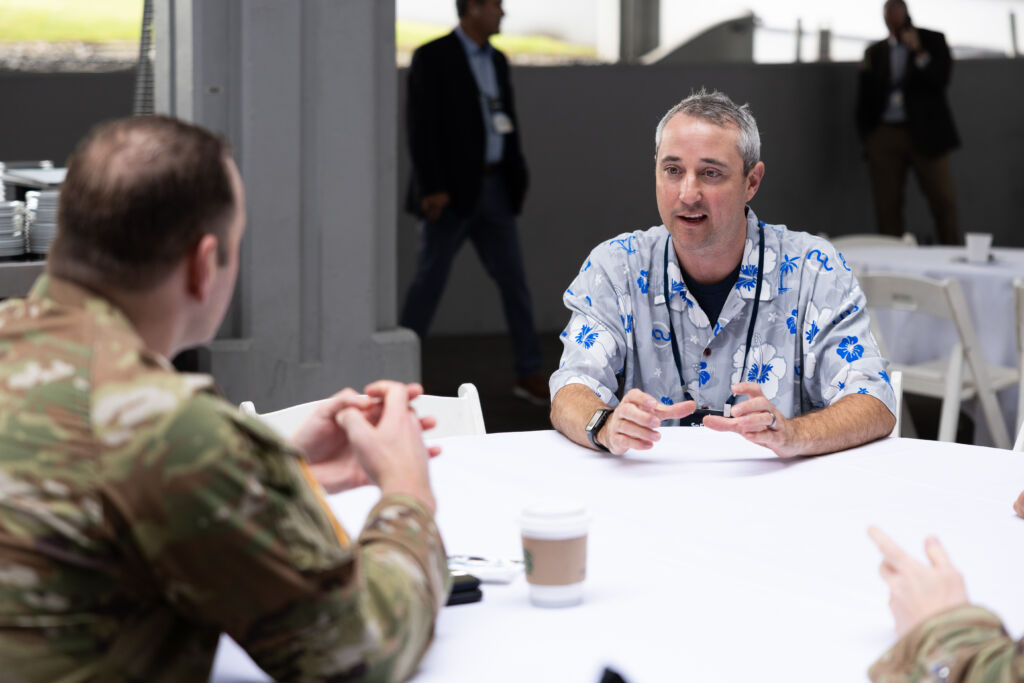
The GMM Showcase of SpEC featured the “Past, Present, and Future of SpEC” presentation from SSC and a reception where selected member performers highlighted their prototypes and capabilities developed through the SpEC OTA. Together, Joint Antenna Marketplace (JAM), Space Mobility and Logistics (SML), and Data Exploitation and Enhanced Processing–Radio Frequency (DEEP-RF) offered a compelling snapshot of how SpEC members are translating complex mission needs into operationally relevant solutions and transforming the future of space defense. Read more here.
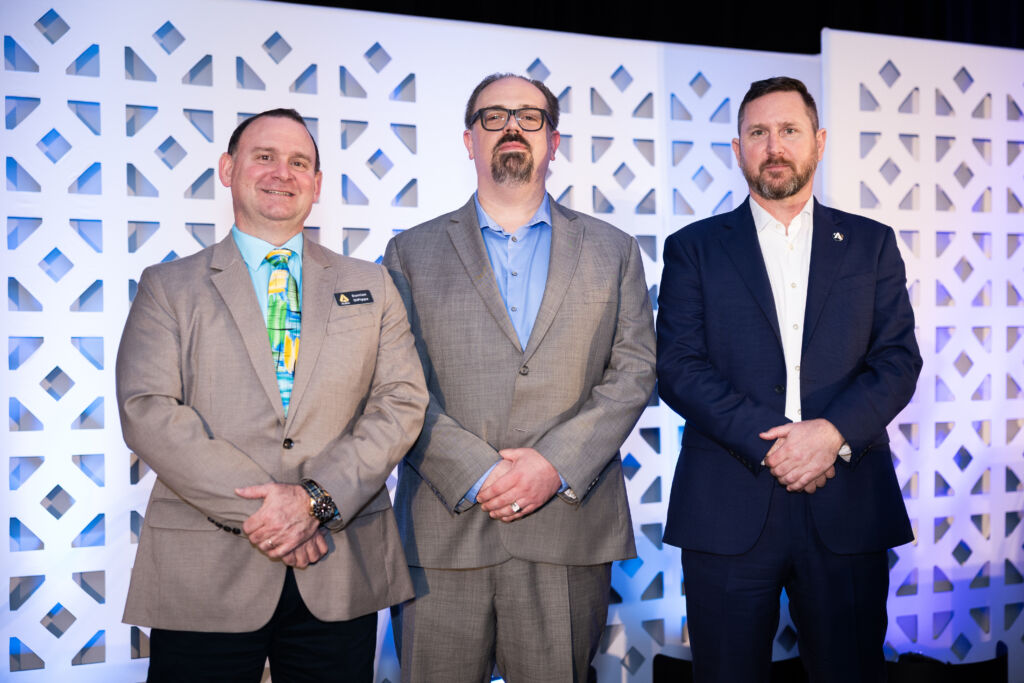
Major General Stephen G. Purdy Jr. Delivers the Keynote Address on the Future of Space Defense
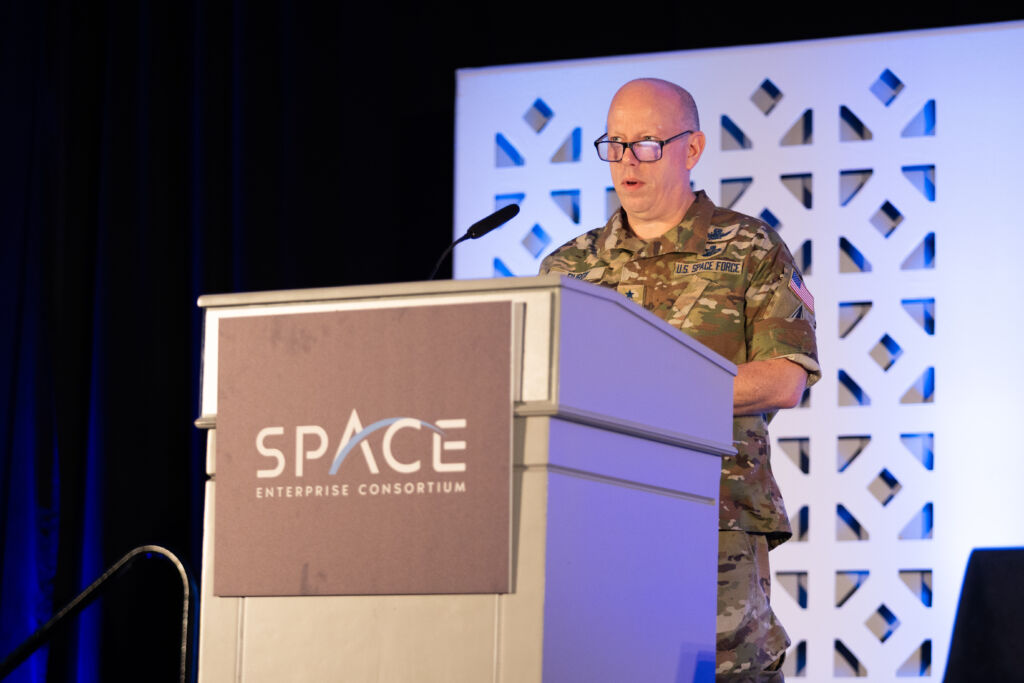
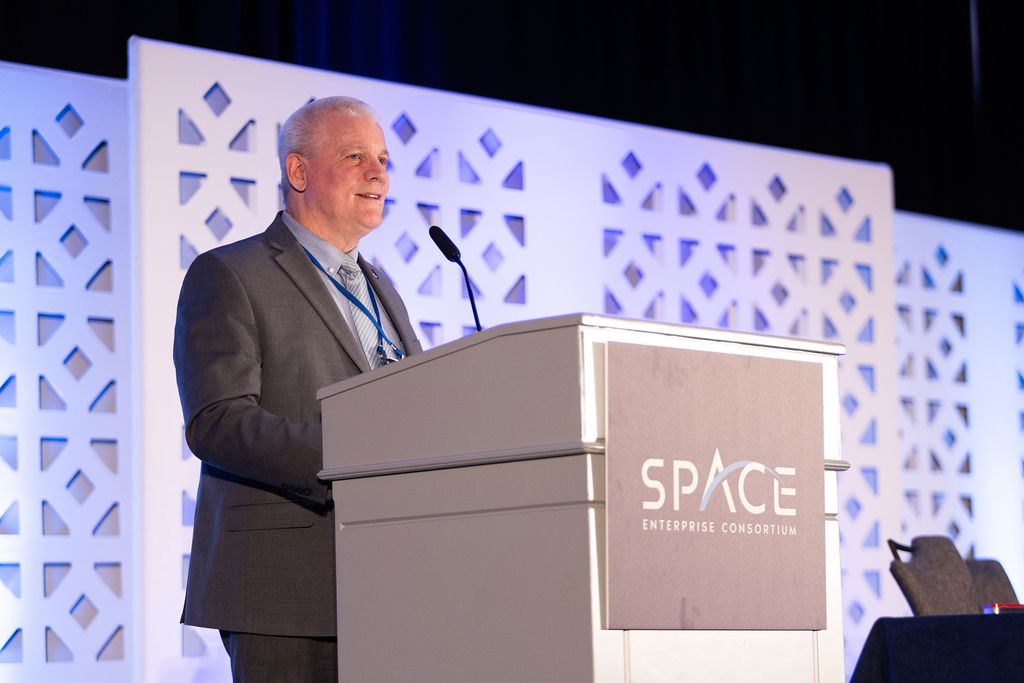
In his keynote, Maj Gen Stephen G. Purdy Jr. reinforced the view of space as a warfighting domain and space acquisition as a critical warfighting function, emphasizing the need to deliver capability at the speed of relevance. He traced the evolution of defense innovation and highlighted recent acquisition reform efforts aimed at reducing friction and accelerating transition from concept to production. Maj Gen Purdy underscored the role of the SpEC Consortium in reshaping the future of space acquisition through closer government–industry collaboration, noting that the coming year will be defined by execution, with a focus on production, scaling proven capabilities, and building on the demonstrated success of the SpEC program.
“My call to [the SpEC community] is: Continue to execute, deliver, integrate, and improve. And we can all deliver technology to the U.S warfighter faster.”
Unclassified Intel Threat Brief
This session examined how near-peer adversaries view and employ space power, with a focus on Russia and China’s evolving capabilities and threat postures. The speaker outlined the growing complexity of the space operational environment, including cyber risks, supply chain vulnerabilities, and technology transfer threats, and assessed each nation’s space order of battle.
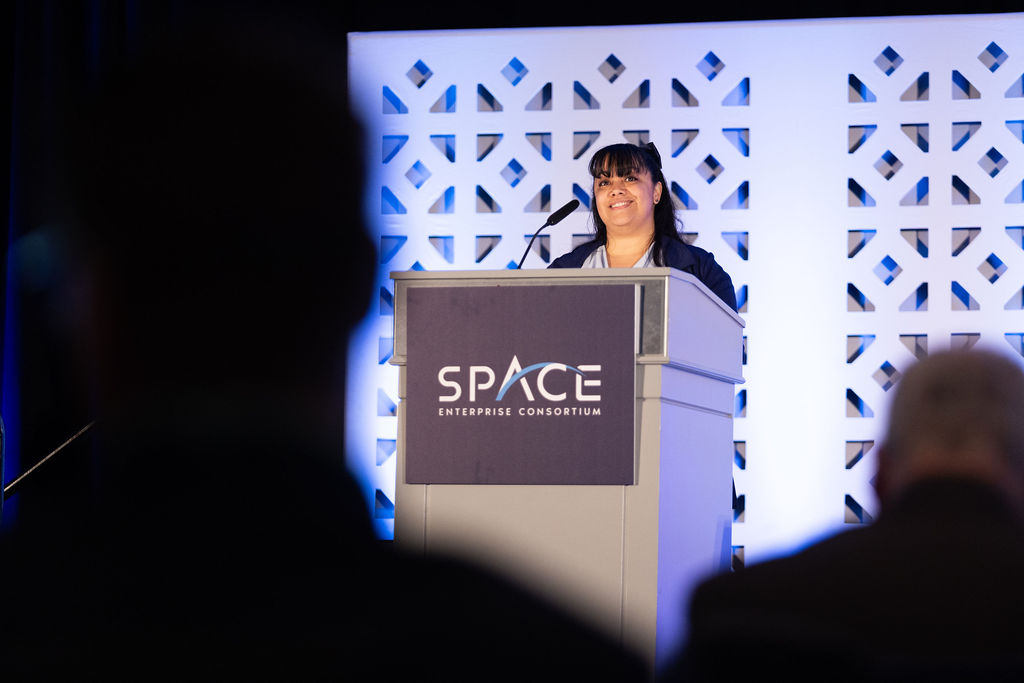
Unity of Effort: Aligning Structure and Mission Across SSC
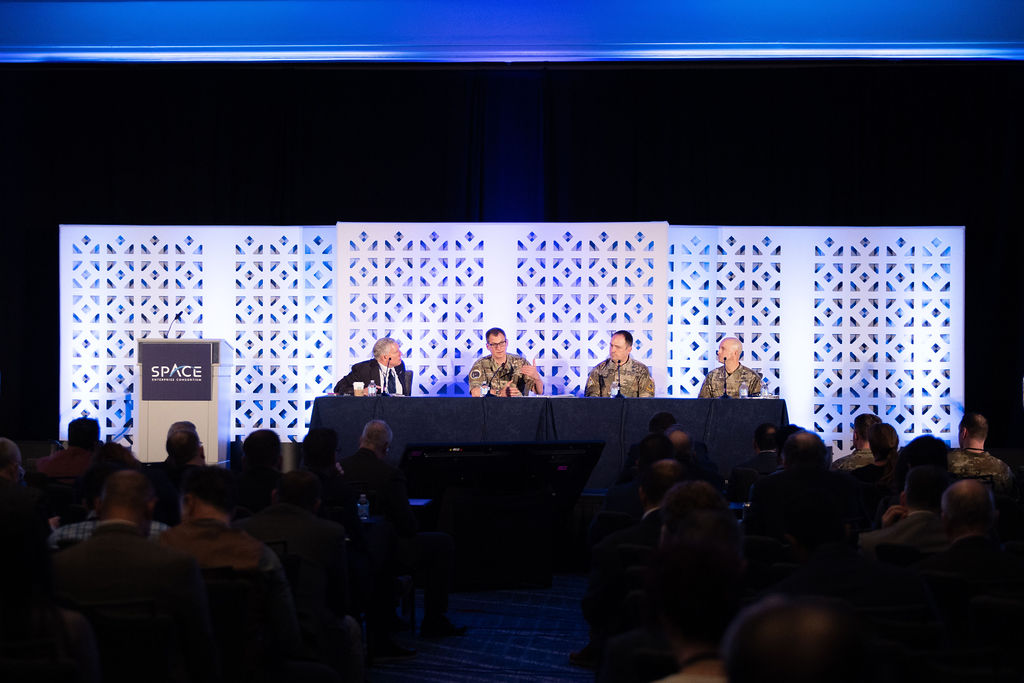
This session highlighted Space Systems Command’s “Unity of Effort” initiative and the establishment of mission-aligned System Delta organizations (SYDs) to better synchronize structure with operational priorities. Col. McClaine, CoL. Klopstein, and Col. Hochstein discussed how aligning responsibilities around missions improves coordination across SSC, accelerates capability delivery, and reduces organizational friction. The approach positions SSC to respond more effectively to evolving warfighter requirements while maintaining agility in a rapidly changing threat environment.
Requirements and Capability Needs for Space Command
This session outlined U.S. Space Command’s evolving requirements and capability needs across the FY23–FY32 Integrated Priority Lists, highlighting a clear progression toward resilient, integrated, and operationally agile space warfighting. Discussion focused on persistent themes such as enhanced battlespace awareness, resilient and timely space command and control, cyber defense of space systems, and modernized missile warning, ISR, and electronic warfare architectures.
Standing Up SWAC Command: Driving Bi-Directional Tech Prioritization for the Future Fight
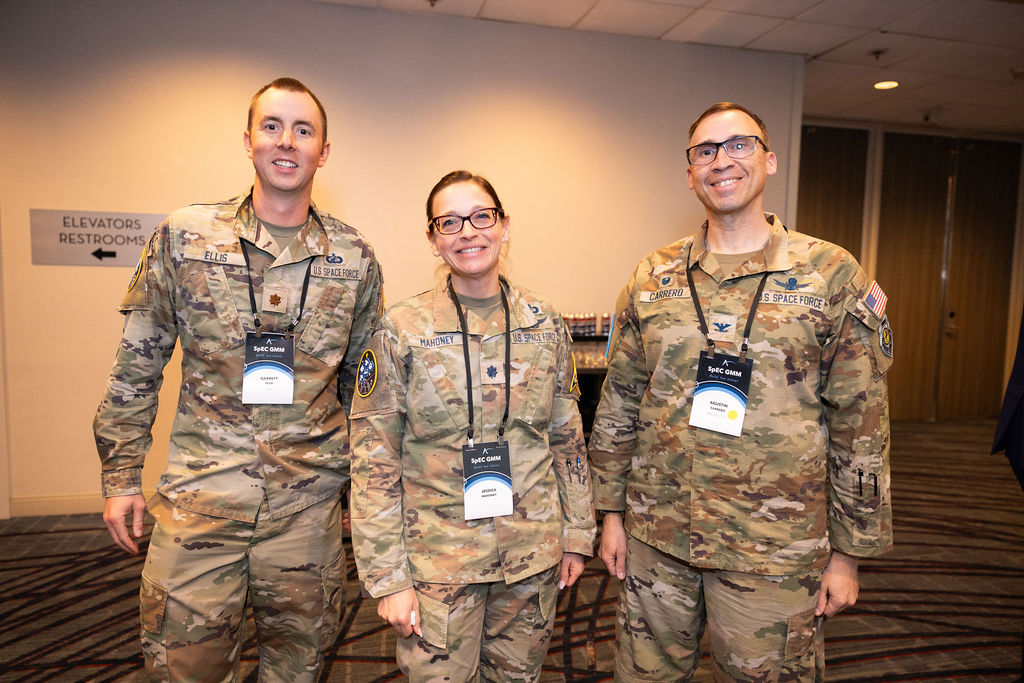
This session detailed how Space Warfighting Analysis Center (SWAC) Command is structuring a disciplined, bi-directional approach to align future operational concepts with technology prioritization to outpace emerging threats. Presenters described how force design, force development, and force employment are integrated across near-, mid-, and long-term horizons to translate experimentation, wargaming, and analysis into an Objective Force that informs resourcing, acquisition, and fielding decisions. The discussion highlighted SWAC’s role in minimizing strategic surprise by producing adaptable, non-authoritative future force options and synchronizing concepts, science and technology investments, and mission area designs—ensuring U.S. Space Force capabilities, force structure, and posture evolve fast enough to meet the demands of the future fight.
GMM Breakout Sessions Align Members on Space Innovation
GMM members enjoyed a full afternoon of breakout sessions. During these sessions, participants met with other leaders to learn more about upcoming and ongoing initiatives, changing CMMC Compliance standards, and insights into space defense missions.
- Tactically Responsive Space (TacRS) with Space Safari
- Space Modernization Initiative (SMI) with SYD 84 / MTM
- Strengthening Cyber Compliance: Understanding CMMC Readiness with NSTXL
- Space Force Data Federation with SYD 85 / BN
- SSC / SpaceWERX – Small Business Engagement and Innovation Pathway
- Advancing Test and Training Infrastructure for the Space Warfighter Breakout Session with SSC / OTTI
- SEWOL with SYD 89 / MD3
- Accelerating the Prototype Acquisition Process
- FORGE ProDev with SYD 84 / MGF
- JCO Onboarding – Commercial Integration in Support of Space Missions
- EM&C AI with Tactical SATCOM Division, EM&C Branch SSC/CGTM
Highlights include:
Inside the OT Playbook: Government Perspectives on Executing High-Impact Acquisition
This invitation-only working session brought together senior acquisition and contracting leaders from NSTXL and NSWC Crane for a candid, government-focused discussion on how Other Transaction (OT) authorities are being applied to deliver complex, high-priority defense programs. Building on recent policy direction and leadership emphasis on speed, accountability, and execution, the session explored practical approaches to structuring OT strategies, managing risk, and accelerating timelines while maintaining fiscal and programmatic discipline.
Through real-world examples and lessons learned, presenters shared insights on decision frameworks, oversight considerations, and common pitfalls, offering attendees actionable perspectives on how OTs are shaping the next era of federal acquisition and how organizations can align with evolving expectations across the Department of War.
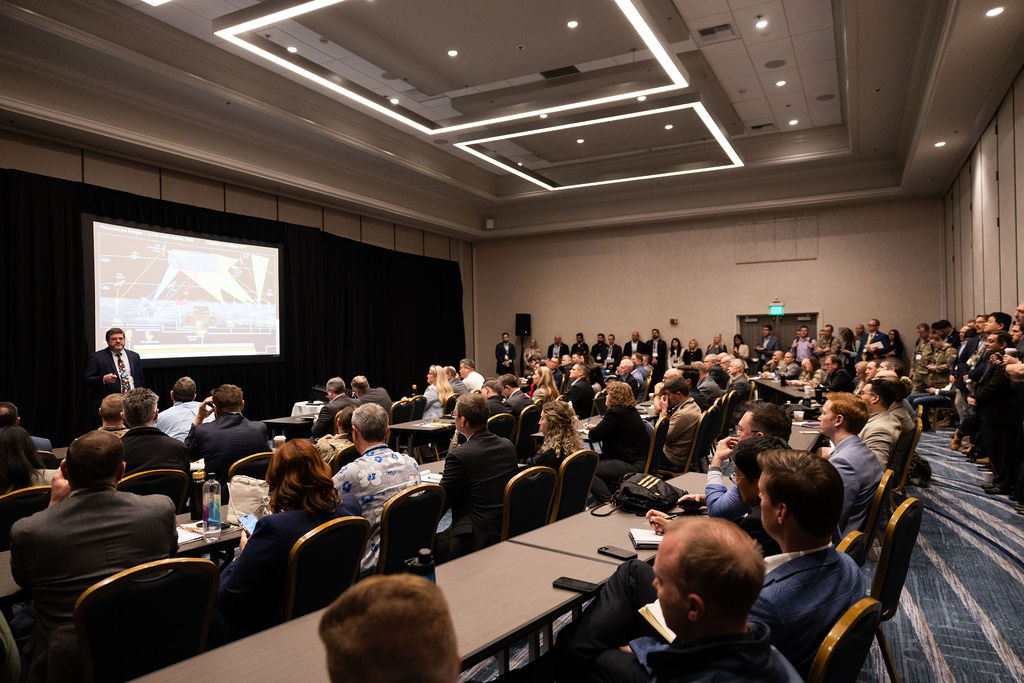
Ask the SpEC Team: Member AMA & Open Forum
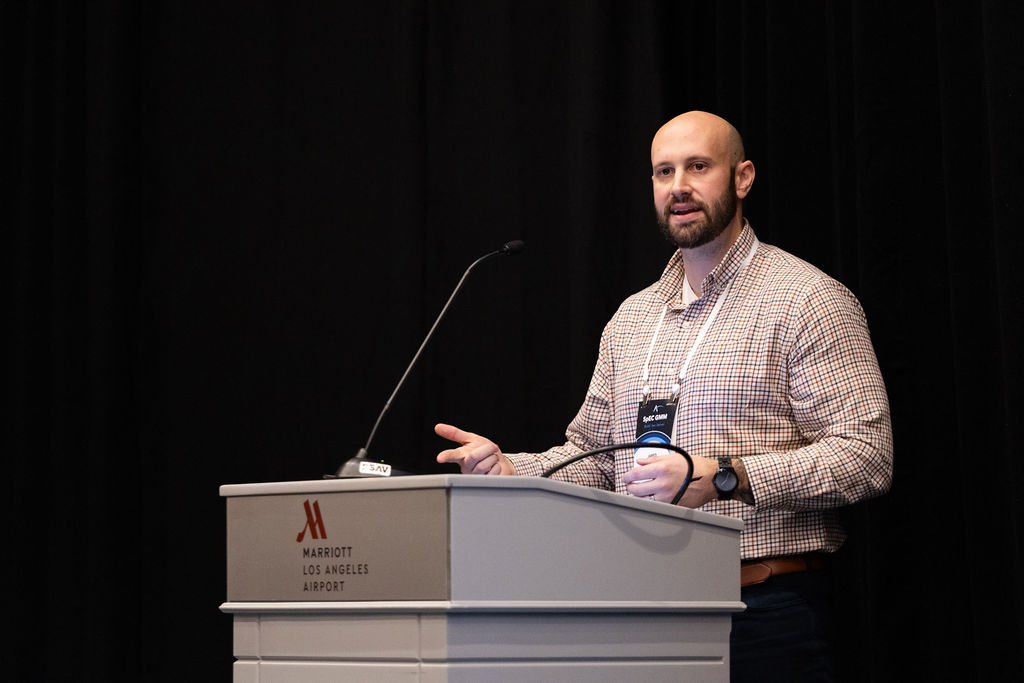
Attendees were able to hear directly from the team behind SpEC. This Ask Me Anything-style session gave members the opportunity to engage with the SpEC Program Manager and Agreements Officer—bringing expertise across program strategy, acquisition pathways, and contracting execution. Attendees were able to bring their questions, share feedback, and gain practical insight into how SpEC opportunities are structured and how to navigate engagement effectively as a member.
This session was moderated by Doug Crowe, VP of NSTXL, SpEC.
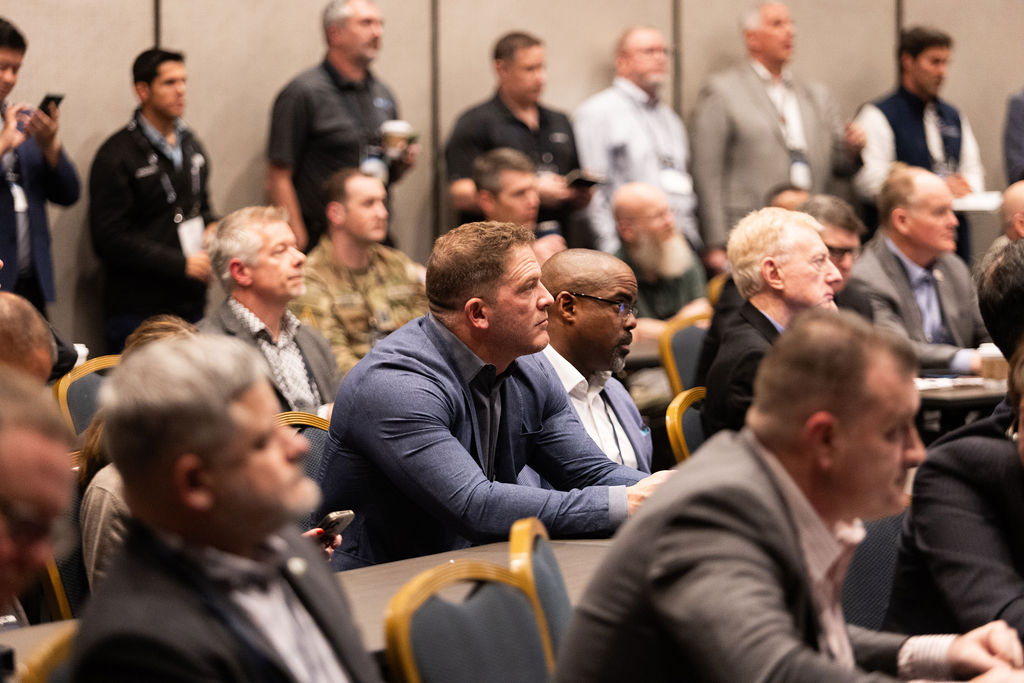
Thank You to All of Our Speakers and Participants
NSTXL and SpEC thank all the speakers, attendees, and participants who helped make this year’s GMM successful, insightful, and forward-thinking. We are excited to see what happens in the next year of space defense innovation.
List of 2026 Speakers and Organizations:
Mr. Doug Crowe, Vice President of NSTXL, SpEC
Col Brendan Hochstein, Commander, System Delta 89 (SYD 89), Space Combat Power, Space Systems
Col Corey Klopstein, Program Executive Officer, Operational Test and Training Infrastructure (OTTI), & Commander (CC), System Delta 81 Space Systems Command
Col Paul LaTour, Chief of Concepts and Technology Delta, U.S. Space Force
Mr. Thomas Lockhart, Director of the Capability and Resource Integration Directorate (J8), Space
Col Bryon McClain, Program Executive Officer for Space Combat Power, Space Systems Command
Mr. Mark McIntosh, Chief Executive Officer, NSTXL
Maj Gen Stephen G. Purdy, Jr., Military Deputy, Acting Assistant Secretary of the Air Force & Service Acquisition Executive, Space, Office of the Assistant Secretary of the Air Force for Space Acquisition and Integration
EM&C Branch SSC/CGTM
JCO
OTTI
SSC
Space Safari
SpaceWERX
SYD 84 / MTM
SYD 85 / BNN
SYD 84 / MGF
SYD 89 /MD3
Tactical SATCOM Division
Get Involved with SpEC
The 2026 SpEC GMM underscored the unification that’s possible under the SpEC OTA consortium model. Now, set with a precedence of collaboration, SpEC innovators and government leaders will go forward into 2026 ready to make real mission impact. To gain access to exclusive SpEC events like the GMM, get involved in opportunities, and more, visit space-enterprise.org.
About SpEC
The Space Enterprise Consortium (SpEC) was created in 2017 through the Air Force Space Systems Command to bridge the gap between military buyers and commercial space startups and small businesses through OTAs. Companies interested in joining the Space Enterprise Consortium can find more information about the organization, including how to join at https://www.space-enterprise.org.